💬 Community Question for Pet Parents:
"For those with pets aged 8+: At what age did you start giving joint supplements? Is your senior pup or kitty still hopping onto the couch effortlessly, or have you noticed them slowing down?"
Drop your experience in the comments below! 👇

Seeing your dog struggle to push themselves up from a hardwood floor or noticing your senior cat hesitation before jumping onto their favorite window sill is heart-wrenching. Canine and feline osteoarthritis (OA) affects over 80% of pets over age 8.
Managing joint degeneration requires a layered strategy matching the severity of your pet's pain.
For early-stage stiffness, mild limping after sleeping, or proactive senior care, daily joint nutraceuticals form the foundation of cartilage protection and lubrication.
Glucosamine & Chondroitin Sulfate:
Mechanism: Glucosamine acts as a building block for cartilage repair, while Chondroitin inhibits destructive tissue enzymes and retains fluid inside the cartilage matrix for shock absorption.
High-Concentration Omega-3 Fatty Acids (EPA & DHA):
Mechanism: Cold-water fish oil rich in EPA (Eicosapentaenoic Acid) actively downregulates systemic joint inflammation, outperforming general plant-based oils.
Green-Lipped Mussel (GLM):
Mechanism: Rich in rare Omega-3 ETA fatty acids and natural glycosaminoglycans, offering dual cartilage-nourishing and anti-inflammatory benefits.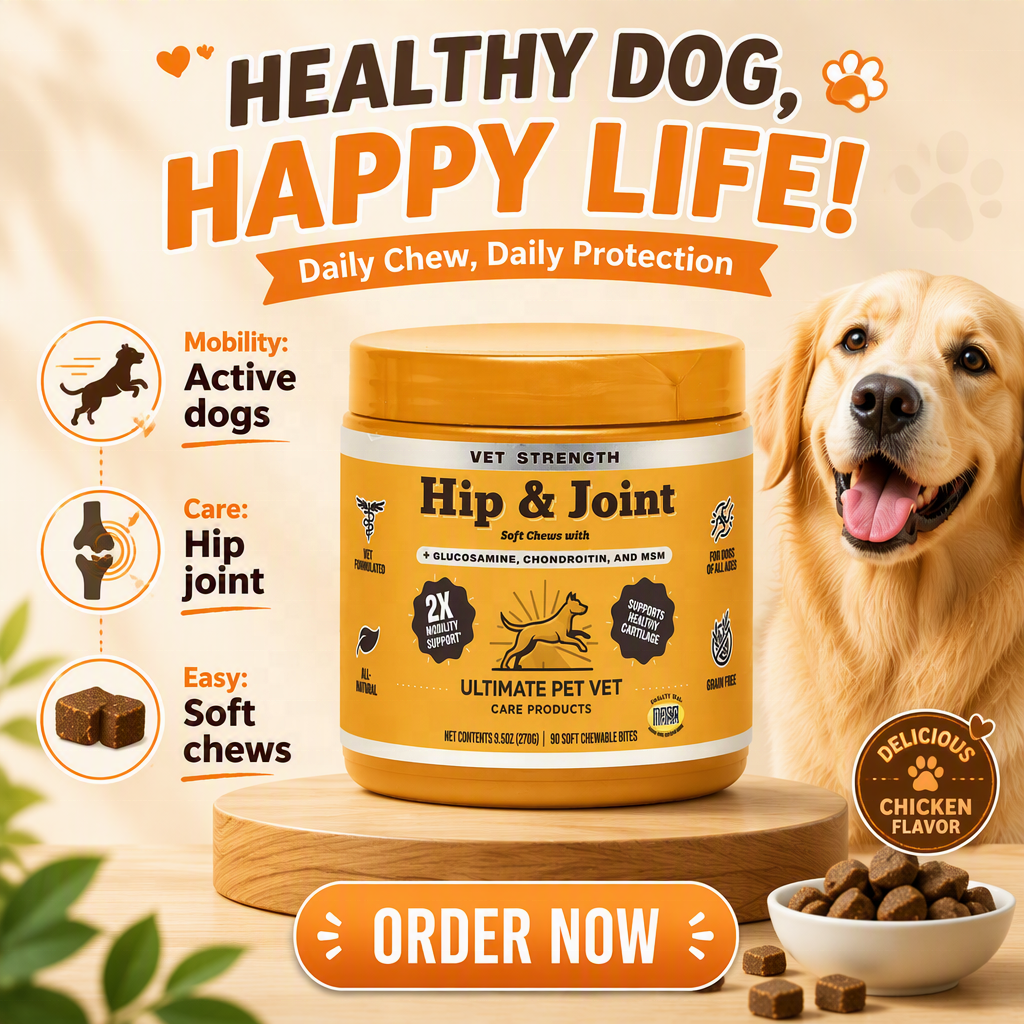
When cartilage wear progresses and pets show obvious limping, whining, or complete refusal to climb stairs, joint supplements alone are no longer enough. You must address active joint pain with veterinary medications.
Even the best joint formula fails if your pet refuses to swallow it. Forcing pills into an anxious senior dog or cat ruins the human-animal bond and causes unnecessary stress.
Switch to Palatable Soft Chews: Formulating joint ingredients into hickory, beef, or poultry-flavored soft chews transforms medication time into a daily treat reward.
Use Liquid Omega-3 Oil Toppers: Drizzle pure, deodorized fish oil directly onto wet or dry kibble. It coats the food, improves palatability, and supplies anti-inflammatory fatty acids seamlessly.
Lickable Joint Pastes for Cats: Cats are notoriously fussy with pills. Squeezing a functional joint paste onto their paw or feeding bowl leverages their natural grooming instinct.
Yes. Joint supplements (Glucosamine, Omega-3s) protect cartilage structure and reduce baseline inflammation, while monoclonal antibody injections (Librela/Solensia) block nerve pain signals. Combining them provides dual structural and pain-relief support under veterinary guidance.
Cats rarely limp when suffering from arthritis. Instead, look for subtle behavioral changes: hesitating before jumping onto high surfaces, using intermediate steps, lower grooming activity, matted fur on their lower back, or sudden irritability when petted near the hips.
For large or giant breeds prone to dysplasia (e.g., Golden Retrievers, German Shepherds), proactive supplementation should begin around age 1 to 2. For small to medium breeds, joint support is recommended starting around age 6 to 7.
Pevet is a professional OEM/ODM manufacturer of veterinary pharmaceuticals and specialized nutraceutical formulations. We partner with global pet brands to design high-compliance mobility care lines, including:
High-Potency Joint Soft Chews: Combining Glucosamine, Chondroitin, MSM, and Green-Lipped Mussel in highly palatable, low-allergen chews.
Purified High-EPA/DHA Marine Oils: Deodorized, heavy-metal-tested fish oils available in easy-dose pump bottles.
Feline Functional Mobility Pastes: Micro-encapsulated joint pastes formulated specifically for picky feline palates.


